David Andrews Interview

Author notes: - The following interview took place between February and September 2024 with some updates in November 2025. If you take anything from this, just know that WorldsAway nearly didn't exist past the year 2000 (except for in Japan and Korea). As you'll read during the interview, this is due to the actions of two people in particular.
David has been seen as a divisive figure amongst the community during his tenure, but I felt it was important to hear his side of the story in his own words.
I think you'll find some of this to be quite eye opening!
Related reading
A good companion piece to this interview is the Timeline article on the Reno Project wiki which documents dates and events which can be corroborated with external evidence. The period from when David first joined the WorldsAway group is documented all the way up until he moves on is covered (1998-2006).
I also highly recommend reading an interview David did with Mark Stone in the October 28th, 1999 edition of "The Mark Stone Report" from investorlinks.com (now defunct). It's a great snapshot in time of where the company was at and drills down on some more of the corporate side of things.
VZones Press Releases - Some more related reading with direct quotes from David more often than not. Great insight into things were headed and the potential that was in the air.
VZones Corporate Updates - Same as above.
You were originally from the UK but moved to the USA. Can you tell us a little bit about where you’re originally from and how you ended up overseas?
In 1974 I started a product design company in the UK. We specialized in packaging and launching products. Most of my clients were in the beverage area, and my biggest client was Britvic, the UK mixer arm of what was then Ind Coope.
In 1976 or thereabouts, Rupert Murdoch decided to buy the Sun newspaper and convert it from old hot metal technology to digital technology. This caused the redundancy of hundreds of compositors who typed in the stories every day on machines that created hot metal type forms that were used in printing. Their union was the NGA who decided to blackmail small creative agencies into giving the compositors jobs that were unsuitable for their experience. The union closed down a lot of ad agencies and creative studios, mine amongst them.
The UK economy at that time was not doing well and that, coupled with the fact that my company had been blacklisted for several months and had finally been blackmailed into joining the union, despite my team’s lack of willingness, drove me to wonder if I could do better elsewhere.
I do remember that at that time, there were bumper stickers on cars in the UK saying “Will the last business(man) to leave the country, please turn out the lights”.
Clearly, I was not alone.
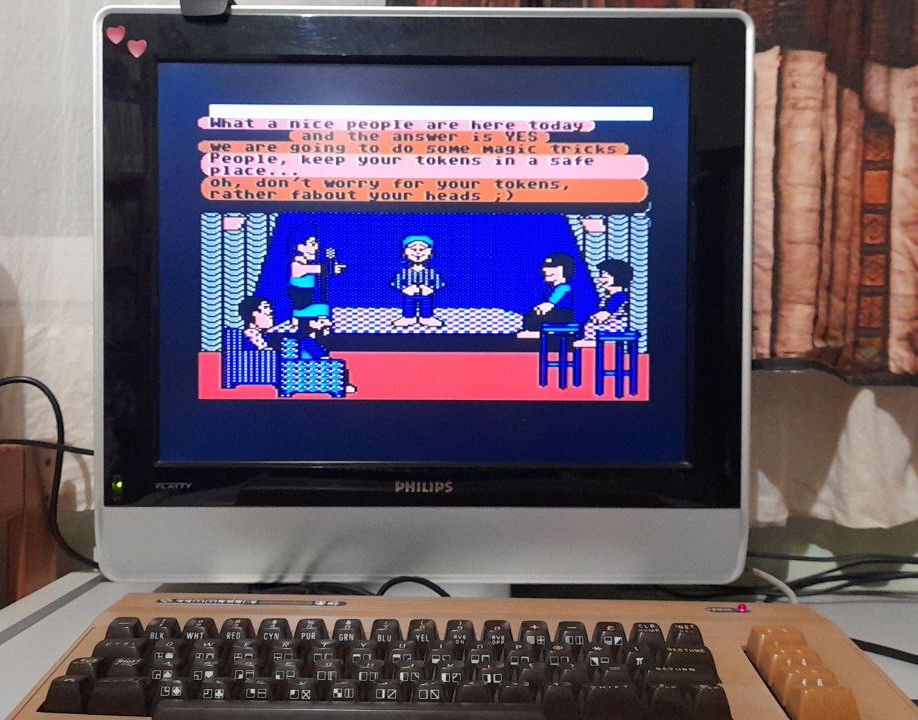
You once mentioned back in the day that you saw Lucasfilm’s Habitat in the 1980’s. Do you recall if you just saw this in a magazine somewhere, or were you involved with Fujitsu earlier on and had seen Habitat.
I recall seeing it in what must have been late in the 1980’s. I seem to think it was either at George Lucas’ Skywalker Ranch in Marin, California or in San Jose.
I recall two screens and a simple pixelated walking figure moving into both screens, and then another joining the first and chatting. It’s difficult to grasp what an impact that had on me as I realized what I was seeing was a major step forward. Up until that time, everything was text and very boring.
When were you first hired at Fujitsu and what was your first role there?
I started working as a consultant for Fujitsu in the early 1980’s. I was a marketing consultant, and over the years evolved into fixing failing companies. I did that for Fujitsu and several other major tech companies where their divisions were failing.
The first project I worked on was Fujitsu’s business phones for which I handled marketing as a consultant.
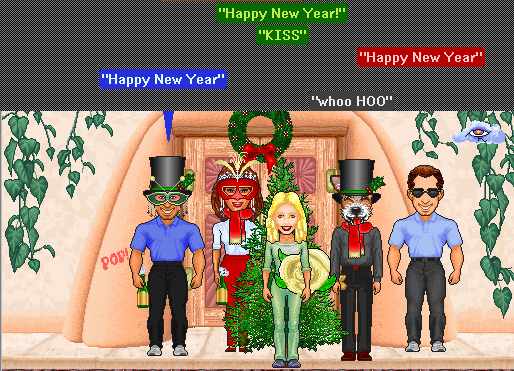
You joined the WorldsAway Products and Services Business Unit as Vice President in early 1998, did you take over from Tony Christopher or was there somebody else you replaced in the role?
Tony was running it when I arrived, but only for a short time. Reid Hoffman had run it prior to that. Reid went on to open a community space that I think eventually spurred him to create LinkedIn.
I believe you worked under Katsuhide Hirai, at the time of the formation of Avaterra, the Senior Vice President of Fujitsu Systems Business of America. Can you tell us about your experience working with him?
Hirai-san is a true hero in all this. If he had not been behind the sale of the business, WorldsAway would have vaporized.
Editors note: Katsuhide Hirai had been involved with WorldsAway since the early days. His connection to WorldsAway started in March 1996 with a brief stint as president of Fujitsu Open Systems Solutions, Inc (FOSSI), the original company WorldsAway was developed under. In July 1996, FOSSI was renamed to Fujitsu Software Corporation and Hirai-san remained president but also became COO. In July 1997, he became Senior Vice President of Fujitsu Systems Business of America (FSBA) and General Manager of the WorldsAway group. The WorldsAway group would then be transitioned over to FSBA in October of that year to be under the same umbrella as Hirai.
Can you clarify that a little bit more?
Hirai-san took the proposal for me to spin the WorldsAway group off to one of the Fujitsu Limited board members in Japan.
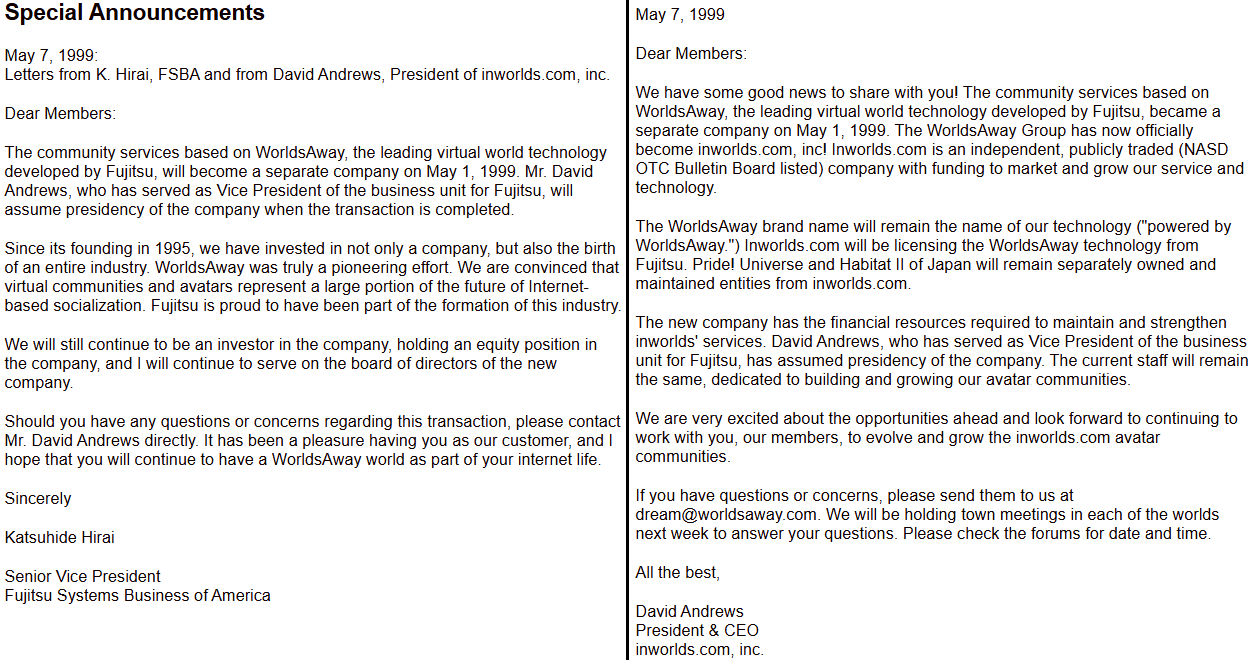
Do you recall what Mr. Hirai’s thoughts on the WorldsAway product were?
He wanted it to survive, even though it was losing money. Fujitsu management did not know what to do with it and I think there were many people in the US and Japan who wanted to close it down.
Had you already had much experience dealing with Japanese business culture by this point? Can you share any anecdotes about this if so.
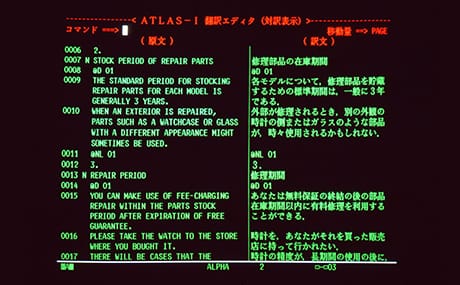
I had been working with many Japanese Fujitsu employees in the US and Japan. I also had an interest in a Japanese translation and publishing company that was a spin out of Fujitsu and its Atlas translation system. But that’s another story.
It's been said you are fluent in Japanese, do you think that helped you at all?
I was relatively good at Japanese, but never truly fluent.
I was running Interlingua, our translation and publishing business, and all the staff were Japanese, so I needed to get some understanding ASAP. I also was in Japan a lot negotiating with MITI and visiting Fujitsu.
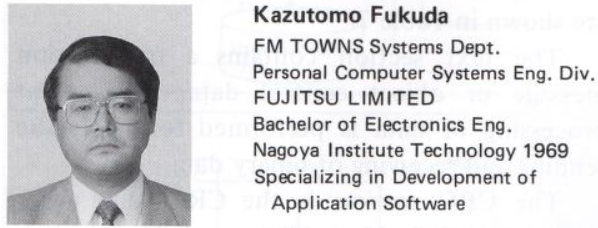
Did you ever have any interactions with Kazutomo Fukuda, who I believe was in charge of Habitat II in Japan at this time and had been around since Fujitsu Habitat on the FM Towns launched in 1990.
I met him several times but never had much interaction.
What were the finances like for WorldsAway under Fujitsu from when you first started, up until you spun the division off?
I was tasked with bringing the division to a breakeven status. It was losing around $4m a year at that point, despite development subsidies from Japan.
Were you given a mandate from the beginning of your tenure to make things profitable or else close things down/find a buyer?
Initially my role was to bring it to breakeven. I managed that in three months, and then was told to sell it.
I tried to get interest but the dot com mantra at the time was all about getting to a million users. That was clearly not a viable goal, so other funded dot coms were not interested.
Fujitsu then gave me 90 days to sell it or close it down.
It’s been said by former staff that there was a mass layoff of the WorldsAway division sometime in early 1998. Was this something you were involved in?
Yes, I handled it all.
Japanese culture does not do well with layoffs.
I looked at the staffing and realized that a large number of the team were not working at all. There were a few anthropologists on the team who just called in occasionally, a massive support staff to manage the worlds, a large engineering team and more. To reach breakeven and save the business and the worlds I had to do some unpleasant, but vital things. I remember laying off a lot of people, maybe even as much as 50%. Silicon Valley was cranking at that point so I knew that they would be hired immediately by other companies.
Do you remember firing anyone who was vital to the team and then having to hire them back? This was rumored to have happened to some important team members there was no replacement for.
Not true. We never rehired any of the people who left.
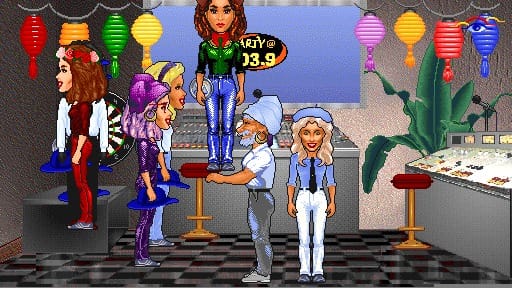
In November 1998, Hotel Silicon and Club Connect were merged and rebranded as “New Radio World” due to a partnership with a company named New Radio Star. It featured the the idea of having a different radio station in a different city where you could hang out, hold events and newbies could sign up via those radio stations and hatch an avatar there.
Was this a successful concept ultimately?
I do recall that I was always looking for how virtual worlds would evolve. I could see many consumer and business applications.

Do you recall the free trap area system that places like Delphi Forums and Xoom had inworld? I’m interested in knowing how that idea came about and what the conversion rate from free to paid member was like.
Don’t remember the stats, but I think the process worked well. The trick was to get people to access for the first time. Once in, a Guide would greet the new visitor and show them around.
Who came up with the initial idea for purchasing the WorldsAway group? Was it suggested to you by Fujitsu, or did you approach them first? Also, do you know when this would’ve happened?
It was my initial idea. At first they were skeptical (and so was I), but I believed in the platform and frankly, I could see that they would wrap it up if I didn’t do something ballsy.
Were Fujitsu immediately interested or did you have to convince them that it was a good idea?
Once I had the money, everything was a lot easier.
Were there any other potential bidders involved in taking over the WorldsAway group at all?
None.
In reading press releases from the time period, it’s been mentioned that what happened was actually a reverse merger instead of a straight sale. Were there any advantages to doing it this way?
It was a reverse merger into a public shell. That made the transaction non-taxable and immediately gave us the capability to raise money on the public markets.
Did you have to go to investors to raise funds for the sale?
I found a partner in Toronto who had the shell and the contacts.
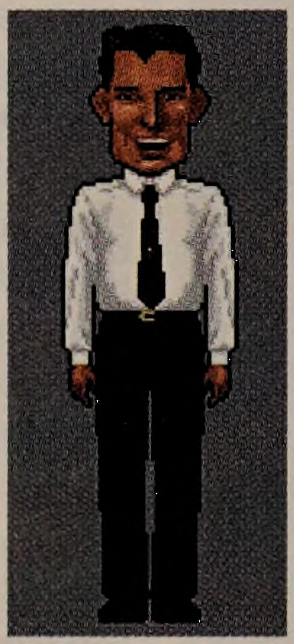
Do you recall how you pitched it to investors?
I pitched by showing them the worlds in action. I recall being in Vaduz, Liechtenstein and pitching a group of bankers.
After the pitch, one banker came to me and said he would like to try an avatar.
I was logged in as my avatar Timebandit as usual. The banker moved from one locale to another and found a really cute female avatar. He stopped and chatted to her. He told her his name, asked hers and then asked where she was in the real world (or RW). She said New York. He immediately responded with "I'll be in New York next week. Can we meet for a drink?”
At that point I stopped him because Timebandit was my avatar and the last thing I wanted was to be accused of hitting on the members. He got upset with me. I told him that it’s easy to transfer the look of an avatar to the RW, but the cute female could be a short bald guy in Detroit. He dropped the mouse and hurried off. No investment there.
At some point in 1998, you were approached by a company in England named JuiceUK who were a media agency. This company would later become the European arm of Avaterra. By the time they contacted you, were you already set to purchase the WorldsAway group?
Juice was a digital creative company based in Lancaster, UK. It was run by two young, highly creative guys. At the time that they contacted me we were hurting for art generation, and I knew that if we were to grow fast we needed to have a presence in the English speaking markets. I visited them in the UK and we hit it off. I organized a buyout of their company and had them manage the UK market and avatar and item creation.
What were the original licensing terms between you and Fujitsu for WorldsAway?
As I recall, we had a 5 year buyout plus an initial down payment which was for the WorldsAway intellectual property license and the brand license.
As part of the licensing agreement, was there anything in there that meant that Avaterra would have to share any new code or artwork that they created with Fujitsu Limited?
No, but we were happy to. Hirai-san was on the Avaterra board of directors and Fujitsu Limited retained a 10% equity stake in Avaterra.
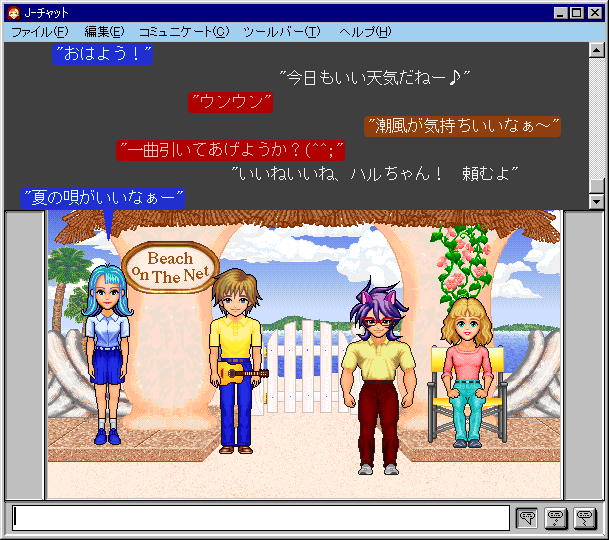
Was there ever any consideration that Avaterra would take over operations of any of the non-English speaking worlds (Glass City in Korea or Habitat II/J-Chat in Japan)?
Never discussed.
Was there any interaction with the teams behind those worlds at all in any way?
Very little, but I did visit them a few times in Japan to see what they were developing.
I saw a lot of things in Japan that were interesting. The first plasma screen ever created… it was huge and had a refrigerator attached to cool it down. A flat screen tabletop that used touch technology. An empathetic avatar character that was truly scary.

What was the relationship like between Avaterra and Pride Media, Inc, WorldsAway licensees who operated the Pride! Virtual world from 1996 until 2000?
We inherited the Pride world. It was run by two guys in San Francisco where I lived and we helped them continue. Eventually it closed down due to cost and lack of interest. They had lost a lot of their traffic and engagement, we had to rationalize the number of worlds we had in play.
As you may recall, the WorldsAway group had a fair few employees. How were the decisions made on who to bring over to Avaterra? Did you want to keep everybody or did you have to be selective about who you wanted.
We kept most of the people in the WorldsAway group after the layoff. A few people left, including Jean-Luc Valliant who was hired away by Reid Hoffman, and was the first CTO at Linkedin. It was a big loss for us and I tried to keep him.
Do you recall how many employees Avaterra had initially?
As a guess, 20-25.
Was there any regular communication with Fujitsu Limited after the sale of the WorldsAway group?
Yes, ongoing. Hirai-san was on the board. We also communicated with the Japanese and Korean teams, mostly about the technology side.
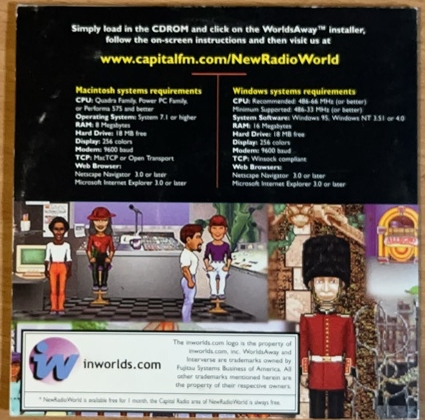
The initial name of the company was Inworlds.com, Inc. Do you recall what the issue was with the name and why it had to be changed?
We chose InWorlds after a search and thought we were ok. Then a dormant company came out of the woodwork and challenged it. It would have caused us a lot of diversion so we decided to rename it.

Do you recall who came up with the name Avaterra?
When I found out that the name was challenged I was in a cab in NYC with Tammy Sims who was our Marketing Director. We were going to a press interview for Business Week as I recall. We knew that we couldn’t leave the cab without coming up with a new name, and we bounced around some candidates. Ava (as in avatar) and Terra (as in Latin for land) came to mind, and it stuck. We also came up with the name VZones during the same cab ride.
How did the IPO go for the company?
Went well. I toured Europe and the US to raise the cash and it happened in a couple of weeks.
Was there a launch event to celebrate?
No, we were too busy to even think about it.
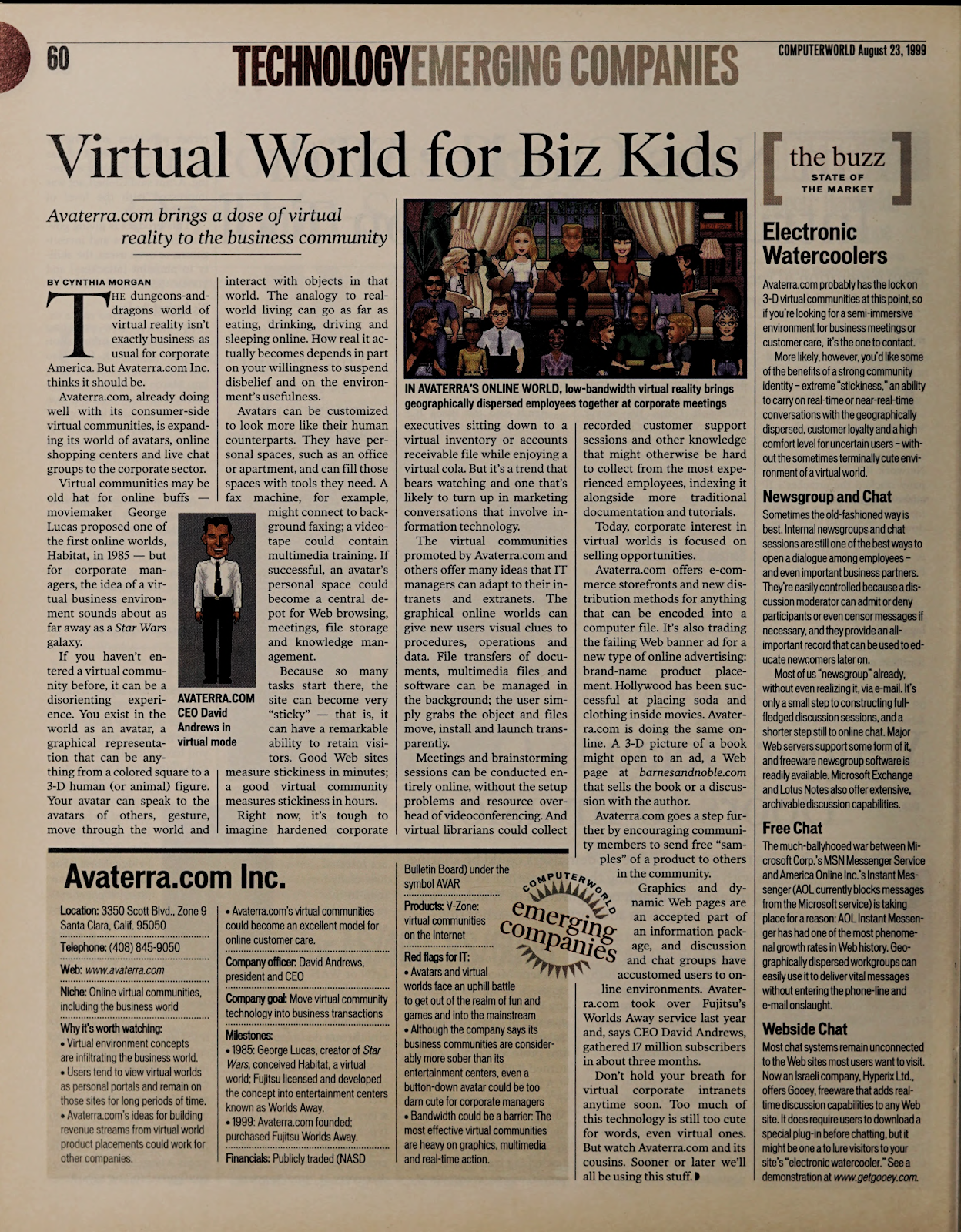
What were your initial plans for taking the WorldsAway product forward at this time and growing the business?
The first issue was to grow the members to generate income and involvement.
Were you present at the 1999 Web Attack conference in San Francisco for the launch of the new corporate name (Avaterra.com, inc) and the demonstration of “AdObject” technology? If so, do you have any memories of the event you can share?
Not sure if I was there, but the AdObject technology was an idea before its time. I wanted to incorporate corporate sponsorships. My view was that if the membership was big enough, a company like Dominos would sponsor inworld pizza slices that were linked to their online order page on the web. Advertisers were interested, but the population needed to be much larger to make sense.

Can you recall any of the initial companies that were approached at this time to advertise with or work with?
Consumer food companies, educational publishers, and others. In fact, any company with a physical product that we could logically incorporate as an inworld object.
We also pitched a lot of only companies with large user bases to get them to either drive traffic to us, or for us to add to their offering. I recall visiting Hallmark cards and they were almost ready to go when someone there said “how do you control what people say inworld?” Of course, we couldn’t and never would, so that deal blew out…they were terrified that someone would say that their cards sucked, or the members used profanity.
At this time, were you based in California? If so, were you in the office every day at this time or did you work remotely.
Every day, early till late, and so was the entire team. A lot of people worked very hard to make the Zones successful.
Do you recall if it was a smooth transition moving the entire department from the original Fujitsu building in San Jose to the new Avaterra offices in Santa Clara?
I was raising money so I have no visibility to the way it was done. Michael Hentschel handled it.
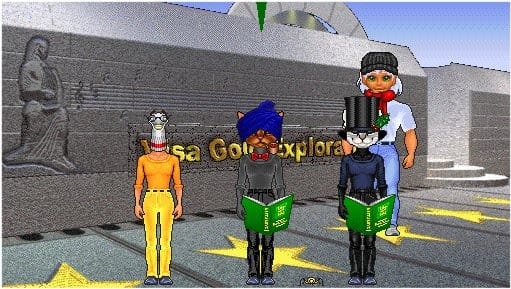
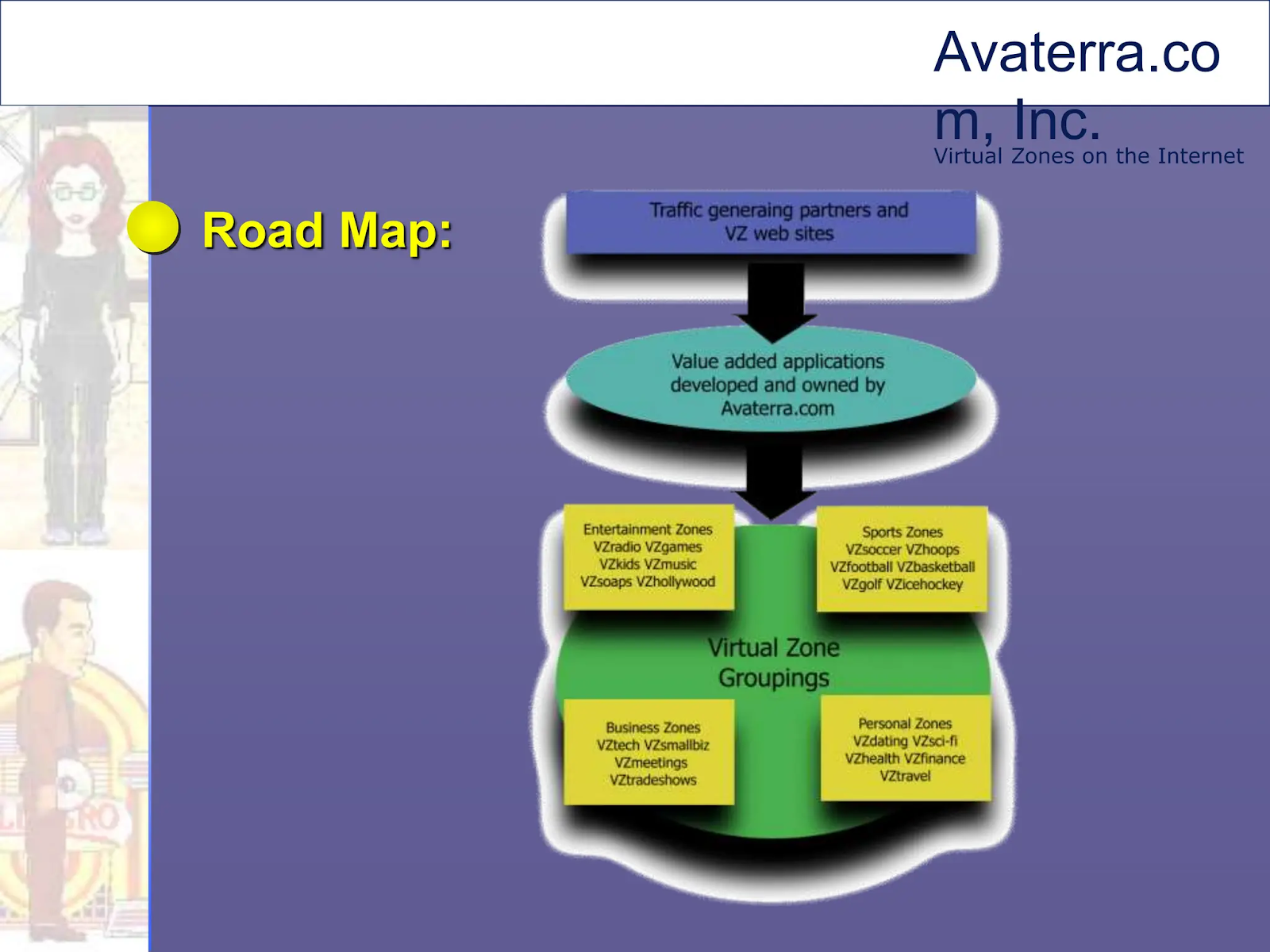
Can you tell us more about the plans for the VZ brand of zones in worlds? There seemed to be plans for different zones such as VZEntertainment, VZSoccer, VZFinance, VZConnections (which was formerly Club Connect/New Radio World) and VZSciFi. Only a couple of those made it to fruition.
We were casting around for themes that would focus on specific interests. I saw that people were interested in joining because of a specific idea such as soccer, but as soon as they entered the world their conversation would revert to just plain chatting about everything. If we came up with an idea for a world it was usually because a partner was on the horizon. The soccer world came out of a meeting I had with UEFA in Munich. I don’t have much of a memory of that meeting. Just that they were enthusiastic but never followed up.
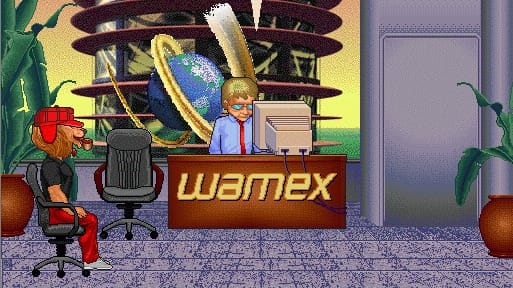
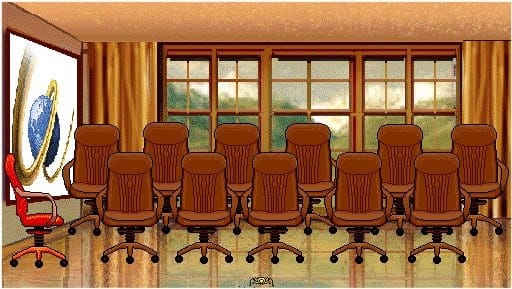
Can you tell us a bit about plans to expand the VZones technology into B2B situations?
We talked to Infineon, a spin-off of Siemens. This came out of a conversation with an old friend from Xerox who moved to the new company. Basically, they couldn’t find enough electronic engineers and wanted a way to identify them. I had the idea that we could create a world that would act as a community for engineers so they could meet up with people they had worked with and maybe hadn’t spoken to for a long time. Infineon would have educational classes in the world, and the natural outcome would be that Infineon would move to the center of the electronic engineering community and be able to recruit the best.
Can you tell us anything about the partnership between a company named M-WEB in China and Avaterra where an agreement was made to create an E-commerce focused virtual world?
I don’t think that we implemented the partnership with M-Web. We did build Hong Kong And Shanghai.
Do you recall some of the Avaterra Europe employees flying out to California and pitching companies about collaborating with VZones?
They came out, but not to pitch.
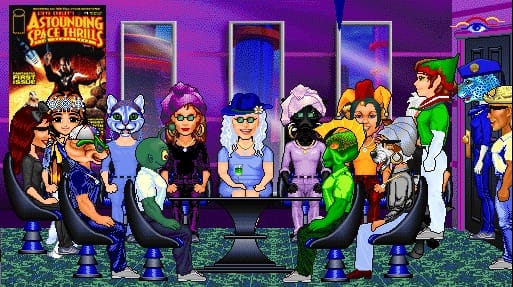
What was Avaterra Europe’s mandate? They are most well known for their work on the VZSciFi area of the VZConnections world to members, but what else were they responsible for?
Development of marketing materials and art, some front end tech and sales in the UK and EU.
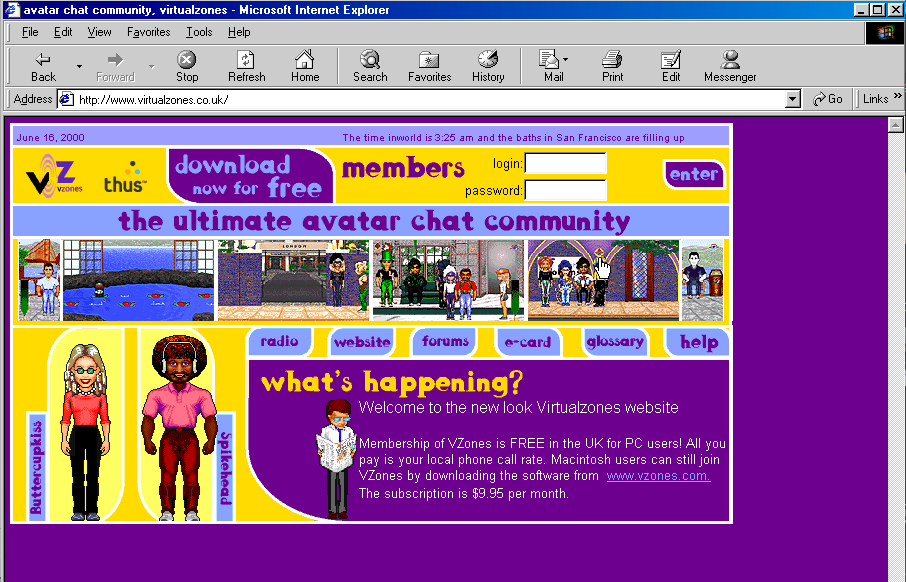
Can you tell us about the deal with THUS and Scottish Telecom in the UK? UK members were able to play in VZConnections for free if they were with either of these ISP’s. Was this arrangement successful?
Those were sponsorship deals. We generated revenue for each of their customers who came to Avaterra. They offered it as an incentive to their subscribers. The most visible and successful partnering effort was with Capital Radio in the UK.
How did Avaterra Canada come to be?
Our CTO who eventually turned on us and caused the final crash was located in Toronto. I hired him because he was someone I had worked with when I consulted to Avery Dennison. He talked a good game and I got suckered. We moved data management and development to Toronto because it was cheaper and we couldn’t find engineers in the Silicon Valley. Also, the CTO lived there, so it made sense at the time. Unfortunately we eventually found that he had been secretly developing software that was not destined for use by Avaterra, and doing it on our dime.
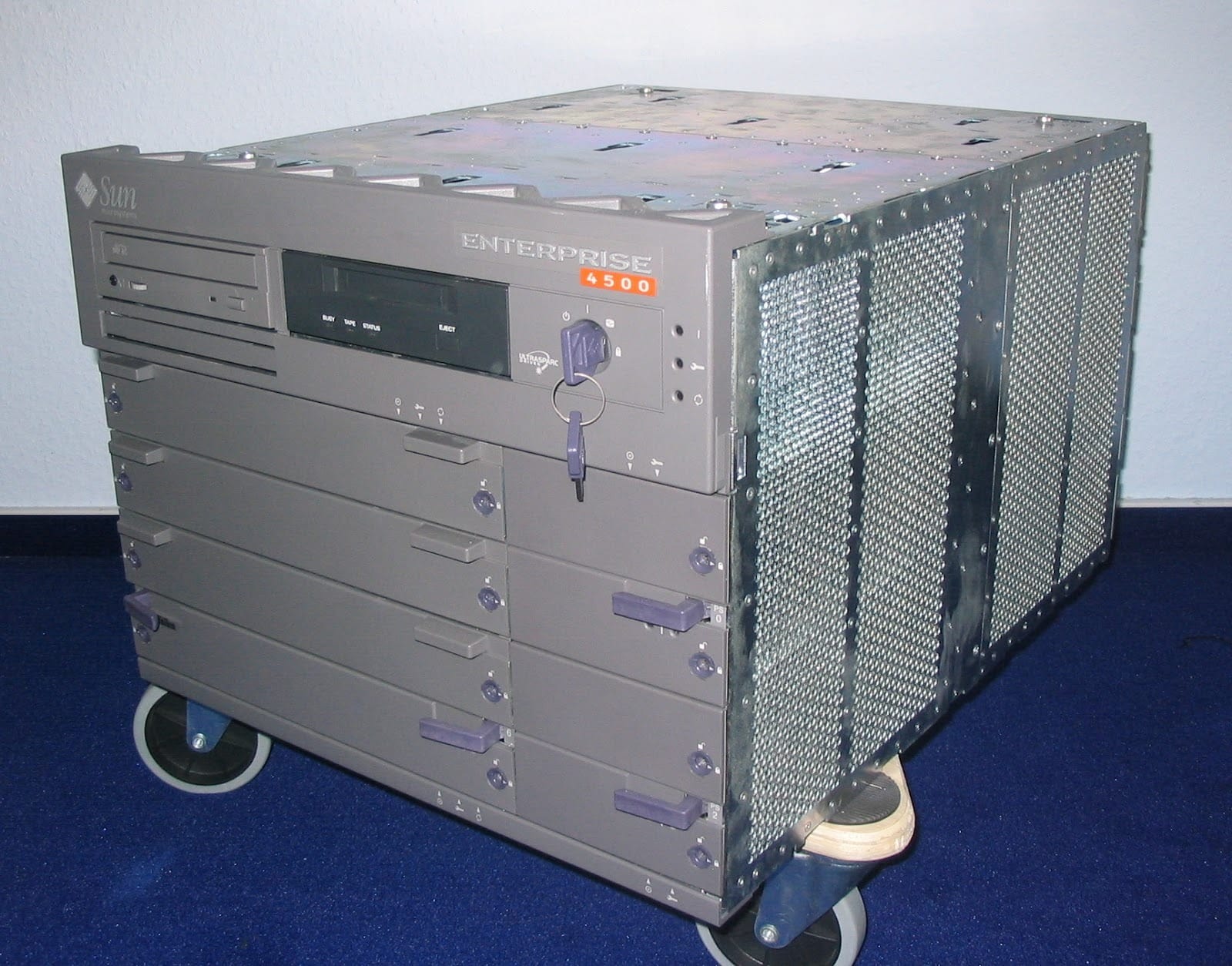
Why was all of the VZones server infrastructure at this time moved from California to Canada?
We wanted to distribute servers for response time. Eventually we had servers in California and New York that were cross backed-up nightly.
Do you recall if there were ever any concerns or worries with regards to the VZones technology and the dreaded Y2K bug?
No, we checked if there were any date based issues and we were clean.
There was a competition Avaterra ran in 1999 called Millennium Millions where the winner would win a million dollars. How did it come about and did anyone win it?
I frankly can’t remember the details. It must have been one of my half-arsed ideas.
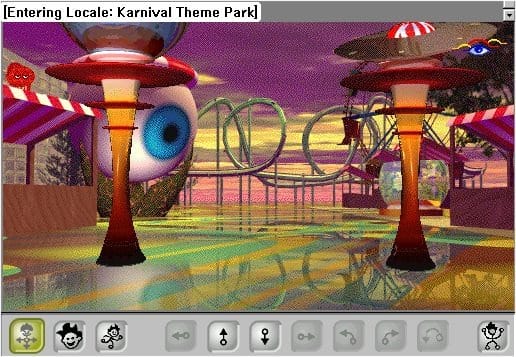
Do you remember anything about the collaboration between VZones and Kia?
That had the potential to be a gate opener for a lot of products. Can’t remember how that ended.
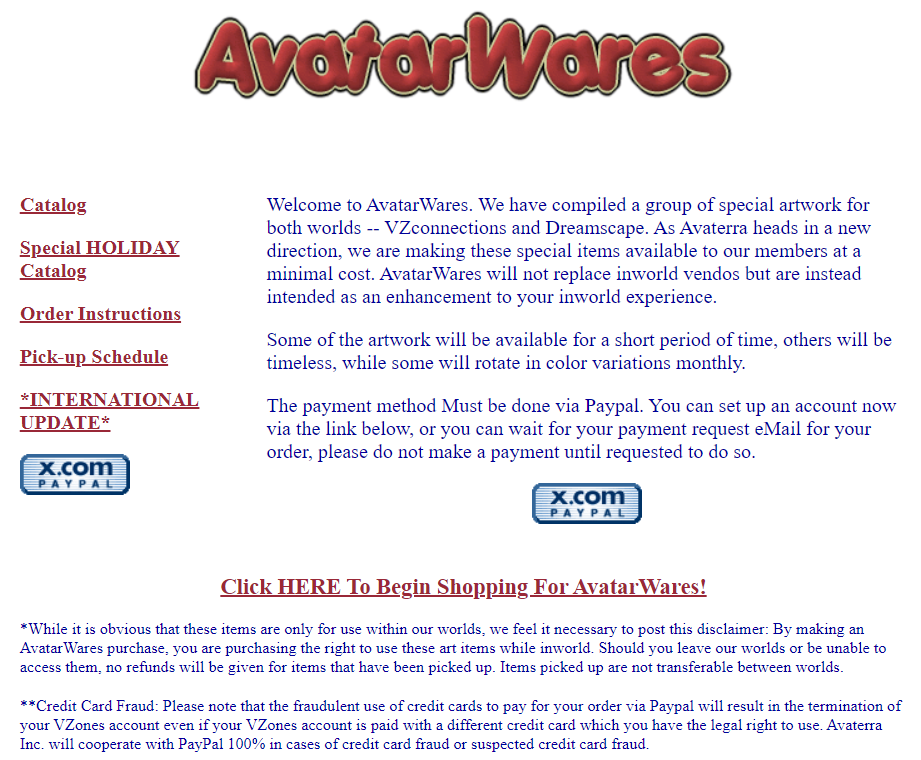
Do you recall how Avatarwares came to be?
It was clear that subscriptions were becoming harder to get and so we needed a new revenue stream. Objects were a major component of the worlds, but the risk of creating something that members didn’t want was high. So, I had the idea of having the members tell us. That led to the need to create and that was expensive and risky. That led to the concept of members creating items and sharing in the revenue.
However, the problem was that art had to be converted before we could use it. We had a couple of people who could do that so James Nosworthy created a shopping app and we were off to the races. Now, the concept of selling items and real estate in virtual worlds is just the norm. We pioneered it.
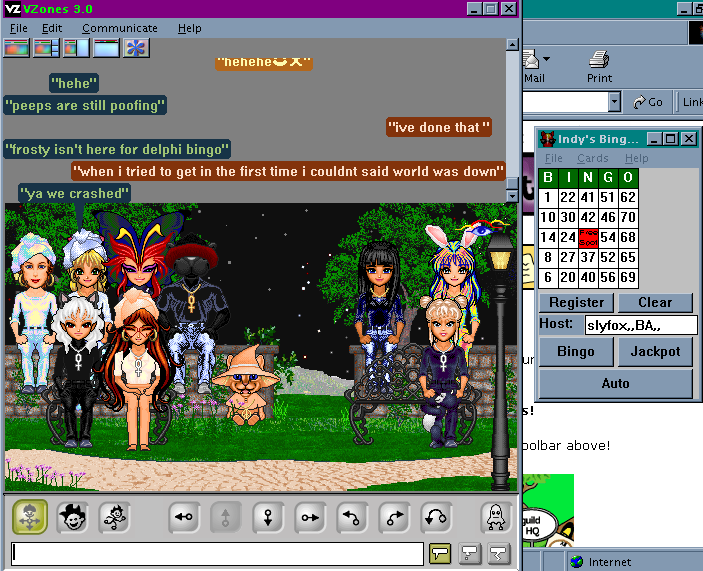
A large amount of art was purchased from the Habitat II/J-Chat team during this time, did that inspire Avatarwares?
No, we never had enough until Avatarwares. We ended up with something like 120 different bodies and thousands of items.
Was the Habitat II/J-Chat art purchase for their entire art collection, or just a portion?
We never purchased that art.
Did you sell or license artwork back to the Habitat II/J-Chat team?
No, we gave them some bodies and a few items. Frankly, if they asked for anything, we gave it to them.
Was Avatarwares a success right off the bat? Or did members have any trepidation about it.
It hit the ground running. Members always wanted more control and we wanted to give it to them.
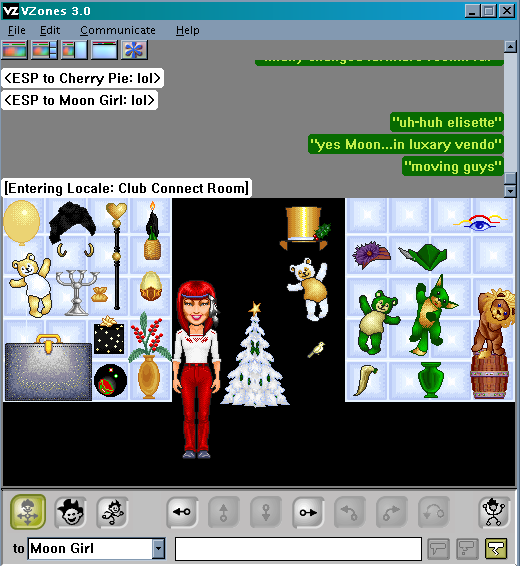
The team released version 3.0 of the VZones client in March 2000. The response was mixed and a lot of people seemed to prefer sticking to the old WorldsAway 2.4 client. Do you remember anything about the feedback you were getting about 3.0?
People don’t like change. The icons on the original interface seemed old fashioned, so we updated them and rationalized where we could.
After the VZones 3.0 client was released, do you remember if there was ever any serious thought or development started on a VZones 3.1 client? or was it halted after the backlash against 3.0
We continued developing but as I recall, never launched the result.
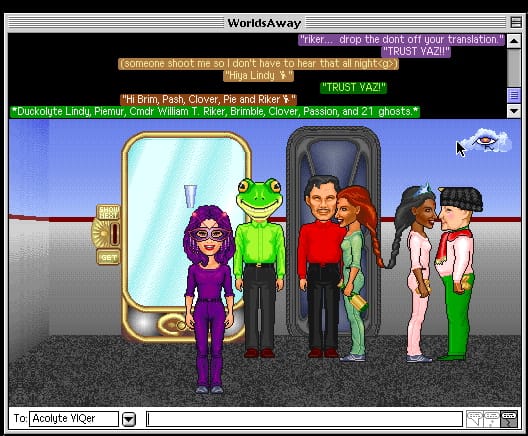
Were you behind the decision that was made to stop development for the WorldsAway/VZones Mac client? if so, do you recall why that decision was made?
It was a financial decision based on the number of Mac machines compared to PCs.
In July of 2000, a hard drive failed in one of the servers and took the entire worlds offline for at least two weeks. Can you tell us any memories of you have during this time period?
That was when Robert was running it. I was at Viralon at the time and I got over 300 emails in one day from members asking for help. I had no control over the servers or anything else at that time and I was running another start-up. I tried to contact Robert and he initially ghosted me. Eventually I reached him. He had run out of money and couldn’t get the servers back on line.
Simultaneously Viralon ran out of funding from a major VC, and I was tasked with shutting it down.
So, I paid the bills that Robert couldn’t cover, we contacted the members who were unbelievable and sent their back subscription dues to us. Then we cobbled together a team of members who worked really hard to bring it back on line. My intention at that time was to get it going again and go find another job running a dot com.
Then I started having fun.
It was clear that Robert was really knowledgeable about the worlds, but couldn’t run a company. I could see that in six months I’d be getting more emails from members. So I struck a deal with Robert to pay his salary over 5 years and asked that he release any ownership of the tech to me. That’s how it went on until Robert left.
Tape backups for things did exist, but do you recall if anything was permanently lost?
I seem to recall that we had a major timewarp. But I don’t recall any complaints. I guess everyone was so relieved to have the worlds open at all.
Do you recall anything about the member volunteer led SWAT team that worked to restore the VZones service?
I don’t recall the individuals, but if they had not stepped forward, the worlds would have been lost forever.
During the communication from yourself to members during the crash, you were asked what would happen if the backups weren’t salvageable, a rebuild wasn’t possible and you couldn’t financially continue. You replied that you were working with Fujitsu to seek out new potential licensees of the WorldsAway software so members would have a place to go to if the worst happened. Was this ever a reality and you were seeking out new licensees?
I remember contacting Fujitsu for help, and they offered some. I don’t recall the need to change or update any licensing until I took over from Robert.
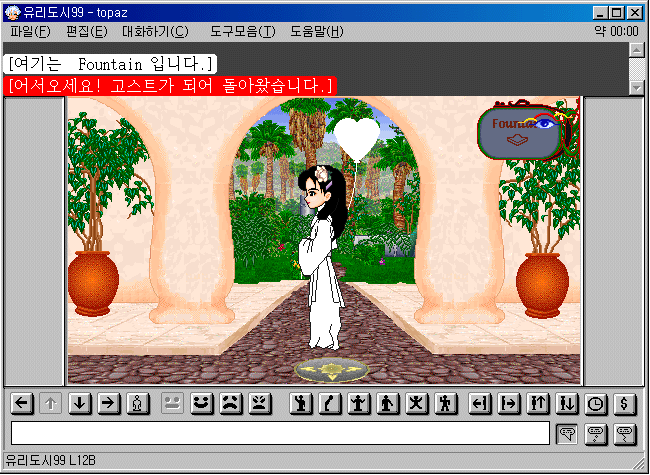
Did you have any interaction with the Glass City service in Korea during this time at all?
None at all personally.
How did the bankruptcy of Avaterra come about? This happened a few months after the dot com bubble burst in March 2000.
Avaterra never was bankrupt, it was dissolved. Simply, we were promised an additional $20m from our investors and the dot com crash ended that. From the first funding we were hounded to grow and spend because there was still so much money available and we could get it if we grew fast. I probably shouldn’t have listened to that.
Figures shared during the July 2000 crash indicated that it was costing approximately $110k a month to keep the lights on, does this figure seem real to you?
If I recall it was more like $80k a month but I can’t be sure.
Were there plans to save the company that fell through at the last minute?
Yes, I found an investor who would pay us $5m for rights to market in Europe. As I mentioned before, I learned that our CTO was not necessarily on the level and fired him. He retaliated by contacting the investor and told a lot of lies. I tried to get them to hear the truth but it was too late.
What was the moment you realized things were done and how did you feel about it?
My biggest concern was to keep the worlds running, so I had the board agree to have Robert take over, as he had been a world manager previously. I was in shock at that time. The following week I got a call to run Viralon, so I hoped Robert would be able to do it.
Who approached who with regards to Robert Dunbar taking over operation of the zones via his Virtual Universe company?
I saw it as a way to keep the worlds alive and I think that I went to Robert, but I am not certain.
Did you negotiate with Fujitsu on Roberts behalf for the license for the WorldsAway software being transferred from Avaterra to his Virtual Universe company?
Yes. Actually, there was no formal transfer until I took over from Robert. In the meantime it was just “parked”.
"Robert has an agreement with Avaterra, dating back to early last year. At that point he was given functional control of the Zones” - David Andrews from a March 2001 Delphi Forums post in the "Save Our Worlds" forum
There was no formal agreement with Robert, just a verbal one and a tacit understanding that he would manage the Zones.
Was there anything that could’ve been done to stop Avaterra imploding?
Hindsight is 20/20, but there are some glaring issues. First I should not have gone for rapid growth. Second, I should have invested in more advanced technology early on. Third, I had a few senior people who were not up to task, but I was too busy to see it.
What happened to Canada and the U.K. arm of Avaterra?
I am not sure. I think our original investor took it over. Our CTO went to them and tried to get a job. I think they were too smart to hire him.
Once Avaterra had ran out of money and you had stopped being public facing, were you still the CEO of the company, despite moving on to Viralon?
No, I didn’t hear anything for almost a year and I thought that it was chugging along fine until I got bombarded with emails from our members
What was Viralon?
A start-up that used rewards for referrals. I came in as VP of marketing and then when it was clear that the dev team were dragging their heels, I took the role of CEO for a few months until the investors told me to fold it.
Were you still in communication with anyone at VZones at this time?
Not at all.
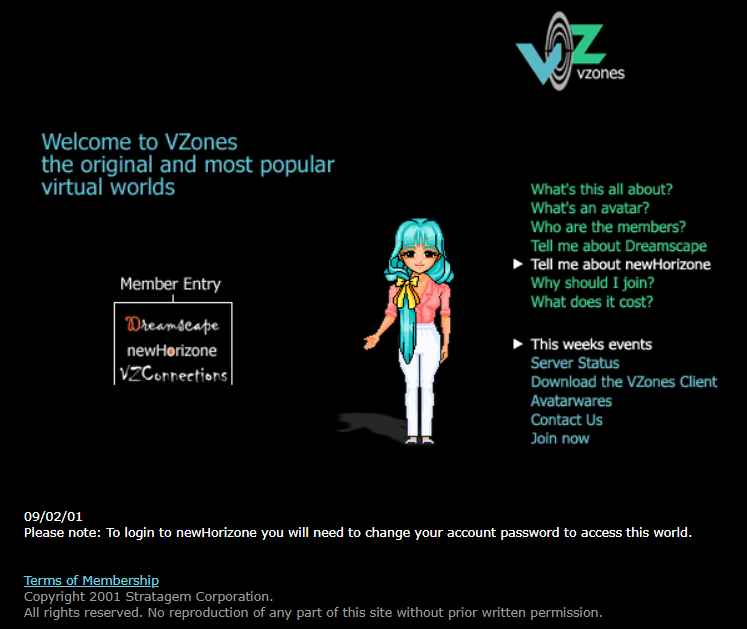
When you came back and took over operation of the zones again, you brought everything under your company, Stratagem Corporation. Did you create this specifically for VZones?
I had a company in place so I used it, rather than creating a new company.
What were your thoughts at this time about where you wanted to take the company?
It was just to keep it going.
I had no real intention of running it long term…I was looking for a new gig that I liked and was offered a couple that I felt were dead ends. I saw this as a short term rescue and planned to hand it off… potentially to a consortium of members.
So many people felt so emotionally connected to the worlds and there were so many that told me that this was their ‘only’ way to reach other people. I had rescued the worlds a couple of times before and its hard for me to give up the ghost, even when I know I should.
Was your vision different because this time you weren’t working with investors?
Yes, nobody was telling me to spend big. In fact my wife hid the checkbook.
How was the working relationship between yourself and Robert structured at this time?
I ran the business and he ran the worlds.
How did you meet James Nosworthy and when did he start working for you as a tech for VZones?
James was an engineer at Viralon and I watched him there. He was one of the good ones, so I thought of him first. It probably didn’t hurt that he was a fellow Brit. His family emigrated to the US from Kent [don’t know where exactly) in the 1970s. They had two sons and the first died way before I met James. Then James died in 2009 and it was tragic on many levels.
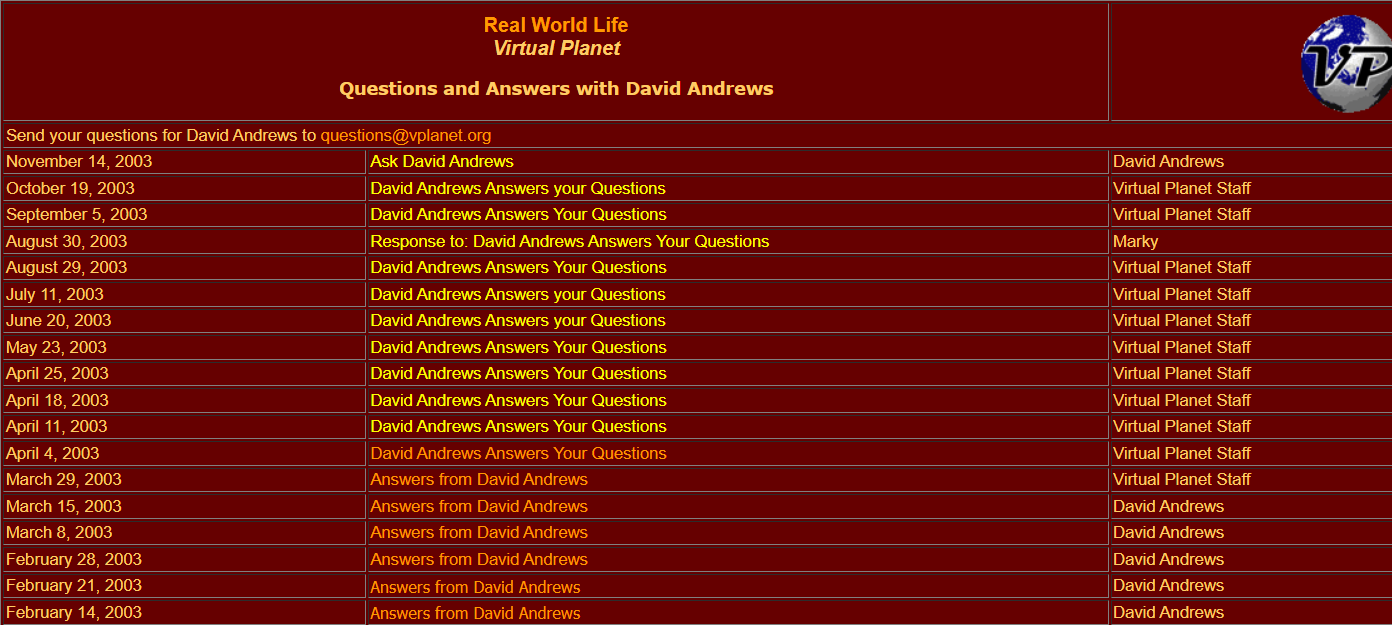
The years 2001, 2002 and 2003 were great years for communication with members. Is that something you learnt after experiencing how communicating with them regularly helped during the crash of July 2000?
I had the time to focus on the member experience, and Robert was also eager to increase user engagement. Robert had a different approach, but it seemed to work at the beginning.
Members often spoke to you a lot during this period. Can you remember any ideas that came about as a result of these chats with the members that you ended up implementing?
A lot of ideas and a lot of input. Also a lot of complaints and some nasty back-biting between members and staff. There was a visceral antipathy against “management”, which was in essence me. I never fully understood why, but maybe I was just not on the same wavelength.
We did, I admit, cause some problems intentionally. For example, we would move items in public locales or change things. This always resulted in a ton of activity inworld and I remember protests. It was all in an effort to increase interaction.
There was also issues regarding the economy. We had to constantly monitor the float of Tokens as they were the currency inworld. Too many and the value went down, so we would remove a lot whenever we could. This did cause some issues with the members occasionally.
Were there any potential partners approached during this time that didn’t work out?
A few. We focused mostly on Avatarwares. My wife, Nathalie ran that program and she did a great job. At one point I think she had over 300 contributing artists.
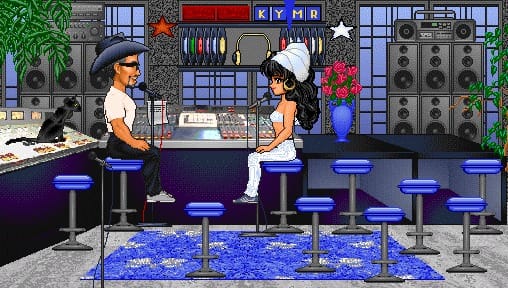
Do you have any memories of appearing on the KYMR/KVZN radio show hosted inworld by HandsomeDJ? It was quite a novel experience being able to do a live call in internet radio show back then.
It was interesting to combine the worlds with a semi-broadcast. It reinforced my belief that we were at the forefront of a new era. It took 20 years for Meta to come to the same conclusion.
From 2001 onwards once you returned, you restarted development efforts with the software by contracting Bill the Galactic Hero to add in new features to the client, and later on James Nosworthy would make server side changes to add new features. Did you have any plans for updating the service that never came to fruition?
A lot of ideas. I wanted it to be more of a 3D experience, I also wanted avatars to evolve into personal profiles where two avatars could give each other a token that passed a lot of information. I wanted to implement the escrow box, where members could deposit tokens or credit card info and others deposit inworld items that would be in escrow until both agreed that the deal was fulfilled. We started that but never finished it.
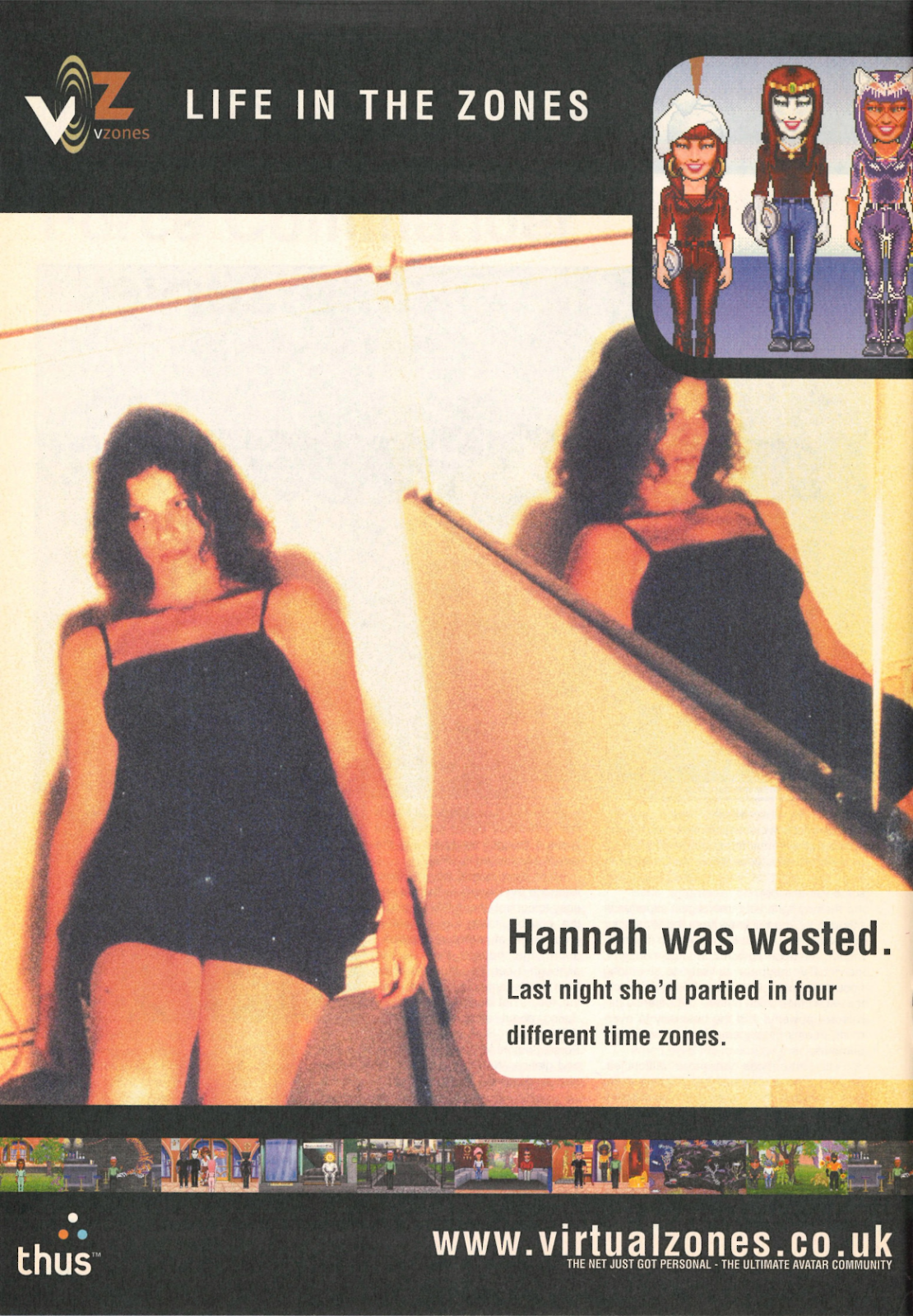
You’ve once mentioned that “Advertising on the internet, on radio and in printed publications has never been very cost effective for us”, why do you think this was?
VZones members are special. Gamers want to kill people, VZones members want community. The best way to build community is to get members to bring other members. That way, they immediately have a friend in the world. Advertising is random, and virtual worlds back in the early 2000s were unheard of.
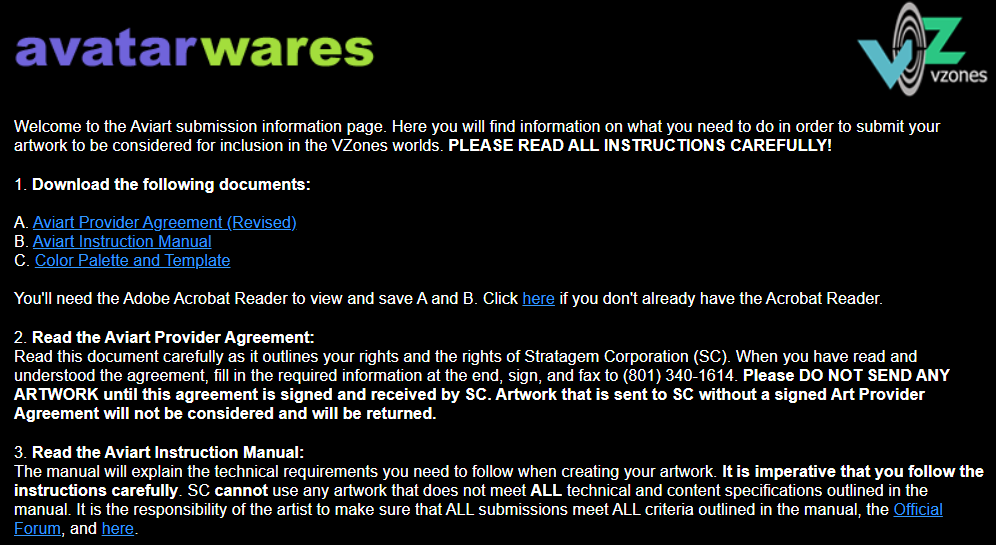
Do you recall anything about a situation where there was a Grinch head released in Avatarwares and Disney sent a cease and desist?
We got a cease and desist from Disney. Neither Nathalie nor myself had any idea that this was the Grinch. We grew up in Europe and had never seen it before.
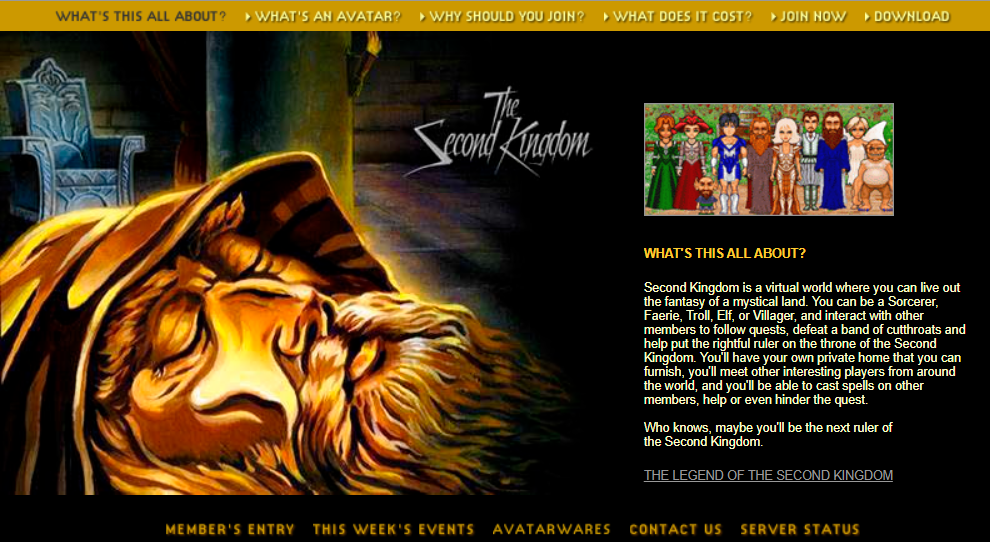
In April 2002, the Second Kingdom world opened up. Do you recall who came up with the idea for a medieval/high fantasy based world setting?
It was my basic idea. Dreamscape was successful because of the storyline and that it built a community of enthusiasts. So, why not create another one?

How did you go about assembling the team that put it together? It was largely built by people who were previously members of the zones before.
Lydia Kovalenko, a long term user and a bundle of trouble was the logical person. She is smart, driven, knowledgeable and trustworthy. I approached her and she agreed. Lydia was great to work with and I have had occasional contact with her over the years.
Why did Second Kingdom eventually close down and merge with the Dreamscape just a few years later?
I never was able to get the theme going as well as Dreamscape. In fact, it was just another Dreamscape because most of the members were the same.
Who came up with the idea for pet accounts?
Guilty again. We wanted to sell a second avatar to members and only a few wanted two human identities. Having a pet seemed to make sense.
Were pet accounts popular?
Yes, we had quite a few.
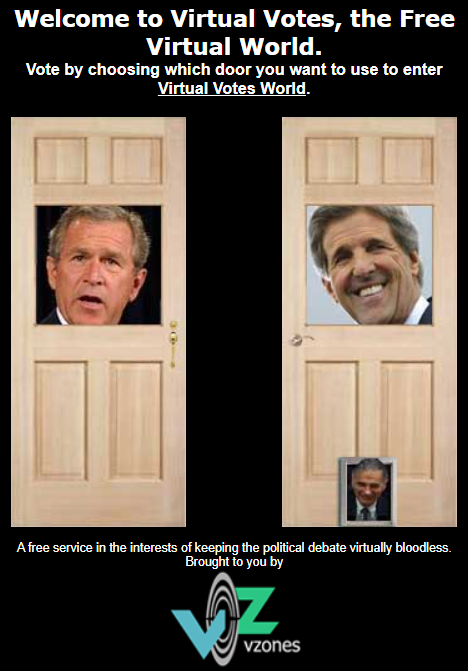
Do you recall anything about the Virtual Votes world that opened up for a short time in October 2004?
That was an effort to increase engagement and interest.

Regarding the Datylus virtual world using the VZones technology which was released in 2005, how did the opportunity come about to work with the people behind that?
They approached me. Not sure how they heard about us.

Do you recall what the original concept was for Datylus?
It was a more modern world, and I think there was a music component but I can’t be sure.
Editors note: The world was styled on New York City and there was a Rap element to the world. The company behind Datylus either were or had access to a music label and there was talk of selling MP3's of artists music via the world that never came to fruition. I was a part of the Datylus team during its brief existence and have several transcripts saved of talks with the guys who put it together that I'll share at some point as they can describe things in a lot more detail.
What were your thoughts on the idea?
Let’s try it.
Datylus wasn’t open for very long and was eventually merged into newHorizone. Why didn’t the concept work out?
Same problem as Second Kingdom. The partner was not driving traffic and eventually it made no sense in having it and staffing it.
Out of all of the worlds, which one had the fastest growth and which one had the most stable member base?
newHorizone by far.
Over the years you were given a lot of flack by certain members of the zones (but notably not everybody), do you think your reputation amongst that small group of individuals was undeserved?
No, the members were feisty and had grown accustomed from the days of WorldsAway that “management” was a PITA. I have thick skin…not many really knew that I had a passion for the worlds and had managed to rescue them from oblivion several times. Plus, it made life interesting ;-)
When did you first consider selling VZones?
We realized in 2005 that we were getting burned out. VZones was a 24/7/365 business and that became wearing. Nathalie had been running Avatarwares for 5 years and felt that the job needed new ideas and new blood. We decided to sell it to a responsible new owner. Boy, did we pick the wrong one!
Do you have any regrets about any of it?
None, except I wish I had waited to find a better buyer who was going to pay the bills and keep the worlds running.
Do you think WorldsAway/VZones ever lived up to its full potential?
It’s still going and has been around since the mid 1990’s. The fact that it has survived is a miracle. The staff and the members were pioneers in a technology that required vision. The outcome is that there are now incredibly successful gaming worlds out there, and Meta has invested over a billion dollars in the technology. This is all largely due to what we all achieved in the early days.
What are you up to these days?
I am running another tech company…big shock. I came out of retirement in 2022 to build Qorums, a platform that fills a gap in the hiring process and it is taking off.
Can you tell us more about Qorums?
Qorums handles the cumbersome interviewing and decision process. It is a single platform that goes from submission of a resume to the final hiring process.
Here are some anecdotes that David shared outside of our interview questions that I thought were interesting.
In my first week managing WorldsAway, I was sitting in a technology review meeting with several of the team and was notified that I was called as a witness in a divorce case. It turned out that there were a couple of our members who were married in the RW who were divorcing. They had accumulated a vast number of items and had them in a shared apartment in the Dreamscape. It seemed that the husband was caught by the wife, chatting up an avatar. She freaked out and opened up the apartment and let anyone take what they wanted. The husband then lost it and filed for divorce. It’s not often that a company is blamed for the break-up of a marriage.
Here’s another memory, but a lot less amusing. This is when we were running VZones. There was an inworld group called the Duckolytes.
They were a small group of around 8-10 RW women who met every day inworld. I received a phone call from one of their members who asked me for the RW contact information of another member. Naturally, I refused but asked why she needed it. She told me that a member of the Duckolytes had been telling the group that her husband was abusive and she was afraid, but she had not been inworld for over a week. The group were alarmed.
I found the missing member’s information in Florida and called her on the phone. A man answered and I asked to speak to her. He told me she had gone away and wouldn’t call. My reaction was to think that the two had split. But an uneasiness continued with me and so I called their local police force. Explaining the situation must have sounded bizarre and I thought that they wouldn’t believe me. “So officer, we have a virtual world and in that world there’s a group that have duck heads and call themselves the Duckolytes. Well, one of them is missing and I think there’s been foul play. Can you do something?”
They went to the location, spoke to the husband and arrested him. Seems he had killed her.
This story will seem to be made up, but I swear that it is 100% true.
We were a public company and so anything I did that was either inside or outside the company was monitored, or could be, by the SEC. Stock in public companies are, of course, available to the public to trade. The stock was initially priced at $8 a share and within a week went up to $13. I am not sure why this happened, but stocks that have a small base of investors can have swings like this. Six months later the stock was around $10, and I started getting calls from “investors” who wanted to buy blocks of stock. I suspected that this was a bit flakey so I avoided them. One person however, wouldn’t give up and called me in the office each day, and even had my home phone number. He was based in Toronto, and I was due to go to the office in Toronto, so I agreed to see him.
He told me that he would pick me up at the office so we could have lunch. I agreed, and as I was meeting with our CTO (and I needed a witness in case this was some kind of set-up) I asked him to join us.
The time rolled around and I was told there was a car waiting for me outside. I expected the investor to be in the car, but he wasn’t. It was a chauffeured limo with a uniformed driver who explained that the investor would meet me at the restaurant. I’m not the smartest person in the world, but I could see that either this was a very wealthy person I was going to meet, or a complete con man.
We reached the restaurant which was out of the city and we entered the restaurant. It was empty, except for two old guys at the center table. We introduced ourselves, and I asked why the restaurant was empty. He said he had bought it for a day for his exclusive use. There was a good number of waitstaff, and a maitre d, so it looked legit.
He didn’t waste a minute…no small talk, nothing. He said that he had a proposition for me. He ran a brokerage that had “people” across the US and would be willing to have them promote our stock to their customers. He then took out a stack of business cards three inches thick and showed them to me. They were from brokers in all the major brokerage houses. I asked what his relationship was with them and he said they were affiliates. I asked why they would promote a little known stock, and said that for every block they sold they would get cash.
At this point I could see that this was probably illegal, or at least conflicted with the broker’s employment agreements, and was at least, unethical.
I asked how he would be compensated, and he said he wanted a block of stock. I can’t remember how many shares, but it was a lot. He said that as the brokers sold the stock, the value would rise and we could sell more stock to raise money for the company (and he hinted, for me too).
One of my grandfathers in London who lived by his wits every day of his life, and was a millionaire by the time he was nineteen auctioning fish, told me once that you can’t fool someone who knows they are an idiot because they are wary, but you can fool someone who thinks they are smart.
Despite that sage advice, I decided not to leave, but play this out.
Before I could ask one more question, the second old guy pulled a briefcase, laid it on the table and opened it so I could see the contents. At this point all sense of reality left me…I was in a movie and I didn’t know the script. The case (you guessed it) was full of US dollars. Completely full.
While my dropped jaw righted itself, the guy with the briefcase said that this is the cash they give the brokers.
It was surreal, to say the least.
I kind of freaked out. I immediately wondered if this was an entrapment, or if it was just a con. I stood up and said I wasn’t interested and told him we wanted to leave. At this point, we hadn’t even seen the menus.
We headed for the door and outside was the car which took us back to the office.
After all these years, I am still in shock.
If you enjoyed this interview, please feel free to share it around! If you'd like to join the discussion, head on over to our Discord server. If you'd like to buy us a coffee or contribute to keeping the lights on, consider subscribing via the subscribe button up top, or you can donate via Ko-Fi or PayPal.
Subscribers get early access to interviews, archived files and a special role on our Discord.